Staten Island Chamber of Commerce Hosts Lunch with Assemblyman Charles D. Fall
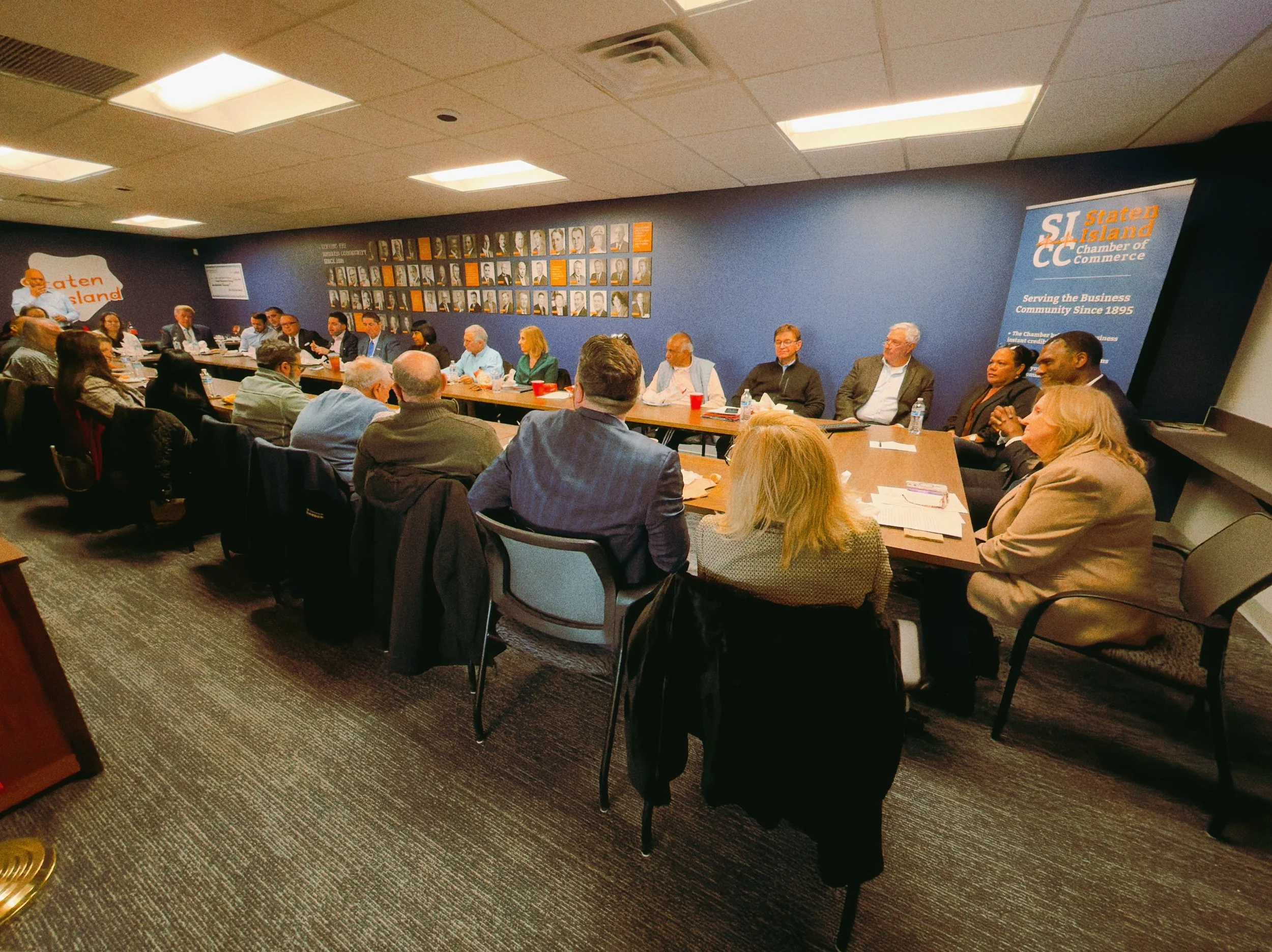
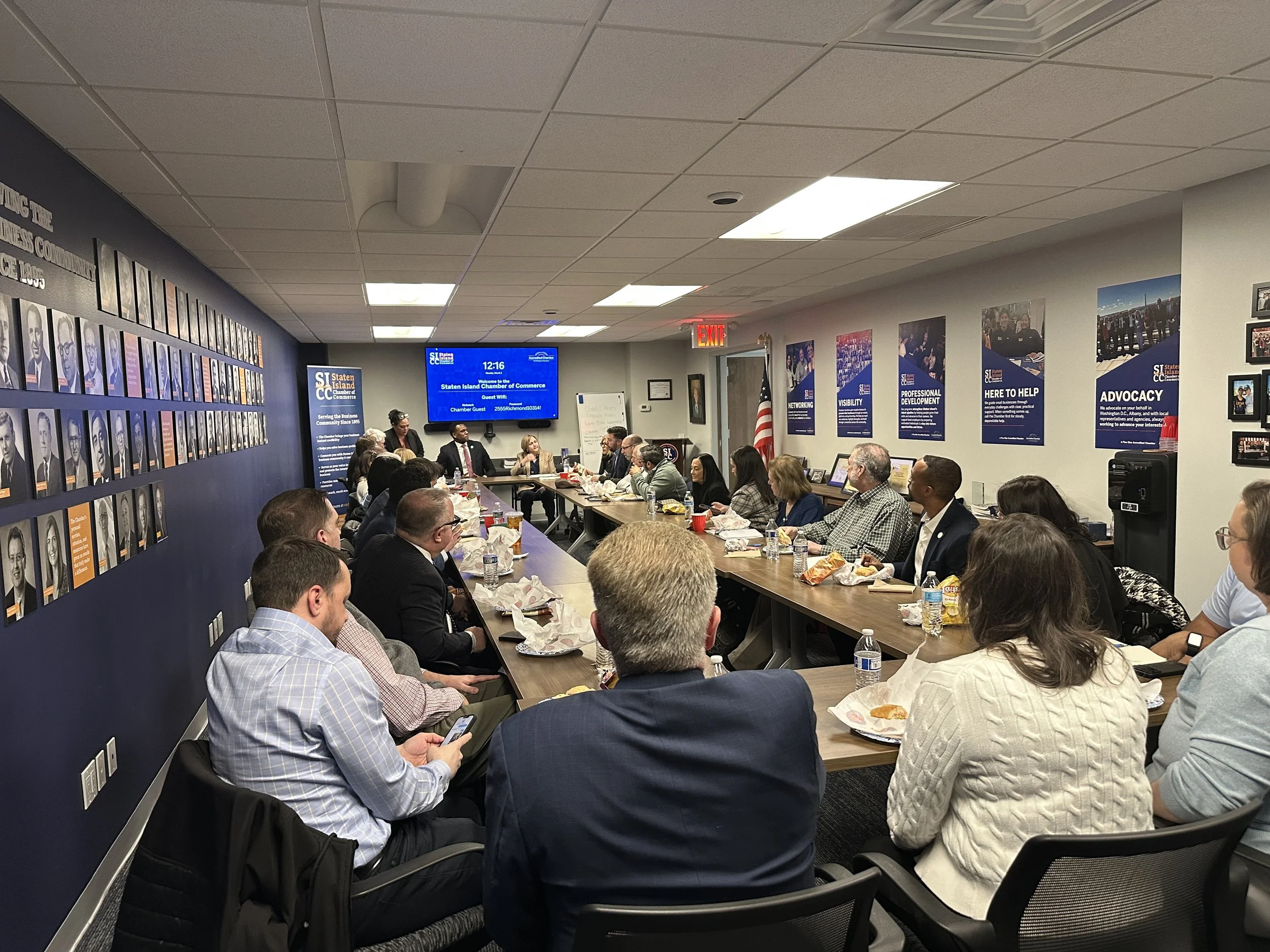
On March 2, the Staten Island Chamber of Commerce welcomed Assemblyman Charles D. Fall for a wide ranging and candid roundtable discussion with members of the small business community. The conversation focused on affordability, insurance costs, public safety, taxation, regulatory challenges, and the overall business climate in New York State.
Representing nearly 700 member businesses, the Chamber emphasized that the vast majority of Staten Island businesses are truly small employers, many with fewer than 20 employees, often family owned and deeply rooted in the community. These businesses operate very differently from large corporations, yet are frequently subject to the same mandates and cost pressures.
Affordability and the State Budget
Assemblyman Fall opened the discussion by acknowledging the affordability challenges facing businesses not only on Staten Island but across New York State. He noted that policy decisions made years ago continue to impact costs today and emphasized that meaningful change requires sustained effort and realistic expectations.
With state budget negotiations underway, he stressed that this is the time to raise concerns and advocate for solutions that address the cost of doing business. He reaffirmed that no new taxes are proposed in the current budget cycle and acknowledged the urgency of addressing rising expenses affecting employers statewide.
Insurance Costs and Fraud Concerns

A major theme of the discussion was the escalating cost of insurance. Business owners raised concerns about insurance fraud in the downstate region, alleging that carriers often settle questionable claims rather than litigate due to high legal costs, ultimately driving up premiums. Assemblyman Fall acknowledged the issue and committed to following up with the Department of Financial Services, questioning whether staffing levels and enforcement capacity may be contributing to the problem.
Health insurance affordability was another pressing concern. Attendees described premiums as unsustainable for small businesses, citing community rating rules and regulatory barriers that prevent innovative pooled or association based health plans. Chamber leadership noted prior unsuccessful efforts to establish an association health plan in New York State. Assemblyman Fall expressed openness to revisiting the issue under current leadership and encouraged continued advocacy and formal letters of support to state regulators.
Public Safety and Criminal Justice Reform
Public safety generated significant discussion. Business owners raised concerns about retail theft, burglaries, youth crime under Raise the Age, discovery law reforms, and organized vehicle theft operations. Several attendees described firsthand experiences involving burglaries and increased criminal activity impacting their businesses and neighborhoods.
Assemblyman Fall reiterated that public safety has been his top priority since taking office and emphasized that while crime statistics matter, public perception of safety is equally important. He pointed to prior state investments in security infrastructure, including funding for Port Authority bridge cameras that have assisted in identifying suspects and improving enforcement. He also indicated that budget negotiations provide an opportunity to advocate for expanded security funding for houses of worship and nonprofit organizations.
Real Estate Taxes and Business Size Disparities
Real estate taxes and property related costs were also raised as a growing burden for small property owners and commercial tenants. Unlike larger corporate landlords, Staten Island’s commercial real estate market is largely composed of small, local owners who often operate a single storefront, mixed use building, or modest retail strip.
Attendees noted that rising real estate taxes are frequently passed down to tenants in the form of higher rents, further compounding the cost of doing business. There was discussion about the need for small businesses to have a stronger voice in real estate tax reform conversations, particularly given that classifications and thresholds often fail to reflect the realities of Staten Island’s small scale commercial landscape.
Cost of Doing Business and Regulatory Pressures
Participants also raised concerns about cumulative cost pressures, including potential future minimum wage increases, payroll related expenses, congestion pricing, and estate tax policies that may incentivize business owners to relocate.
Assemblyman Fall stated that he has opposed congestion pricing unless Staten Island directly benefits from the program. On minimum wage, he acknowledged the strain on employers and emphasized that business input must be part of any future policy discussions. Financial professionals also discussed New York’s estate tax “cliff,” expressing concern that it encourages successful residents and business owners to leave the state. Assemblyman Fall committed to raising the issue with his finance colleagues to better understand its broader impact.
Transportation and Infrastructure
Transportation and infrastructure were also discussed as part of the broader economic landscape impacting Staten Island businesses. Assemblyman Fall reiterated his continued support for the North Shore Bus Rapid Transit project and expressed optimism that momentum is building toward advancing the project. He also referenced expanded ferry service, including the recently launched Staten Island to Brooklyn route, noting that improved connectivity supports workforce mobility, tourism, and local commerce.
Access to Grants and Resources
Participants discussed the need for greater awareness of state grant programs available to small businesses. Assemblyman Fall affirmed that most state agencies administer funding opportunities and offered to help connect businesses with appropriate resources. The Social Care Network and Medicaid waiver programs were also referenced as examples of state initiatives delivering tangible benefits to Staten Island residents and organizations.
The Chamber’s Upcoming Policy Agenda
Chamber leadership shared that the Staten Island Chamber of Commerce will soon be releasing its Small Business Policy Agenda, which will reflect many of the issues raised during the roundtable. The agenda will outline priorities related to insurance reform, public safety, real estate tax relief, affordability, regulatory reform, and small business equity in state policy.
The Chamber reiterated its willingness to convene industry leaders and subject matter experts to support legislative efforts and provide practical insight. Assemblyman Fall emphasized that many of the more than 30 bills he has sponsored originated from direct conversations with constituents and encouraged continued engagement.
The roundtable provided a substantive and productive dialogue between Staten Island’s business community and their state representative, reinforcing the Chamber’s role as a strong advocate for small business and a collaborative partner in shaping policy solutions that support local employers.